
a peek into our Little Ones Program
written by Lainie Holmes, LYKKE Kids founder
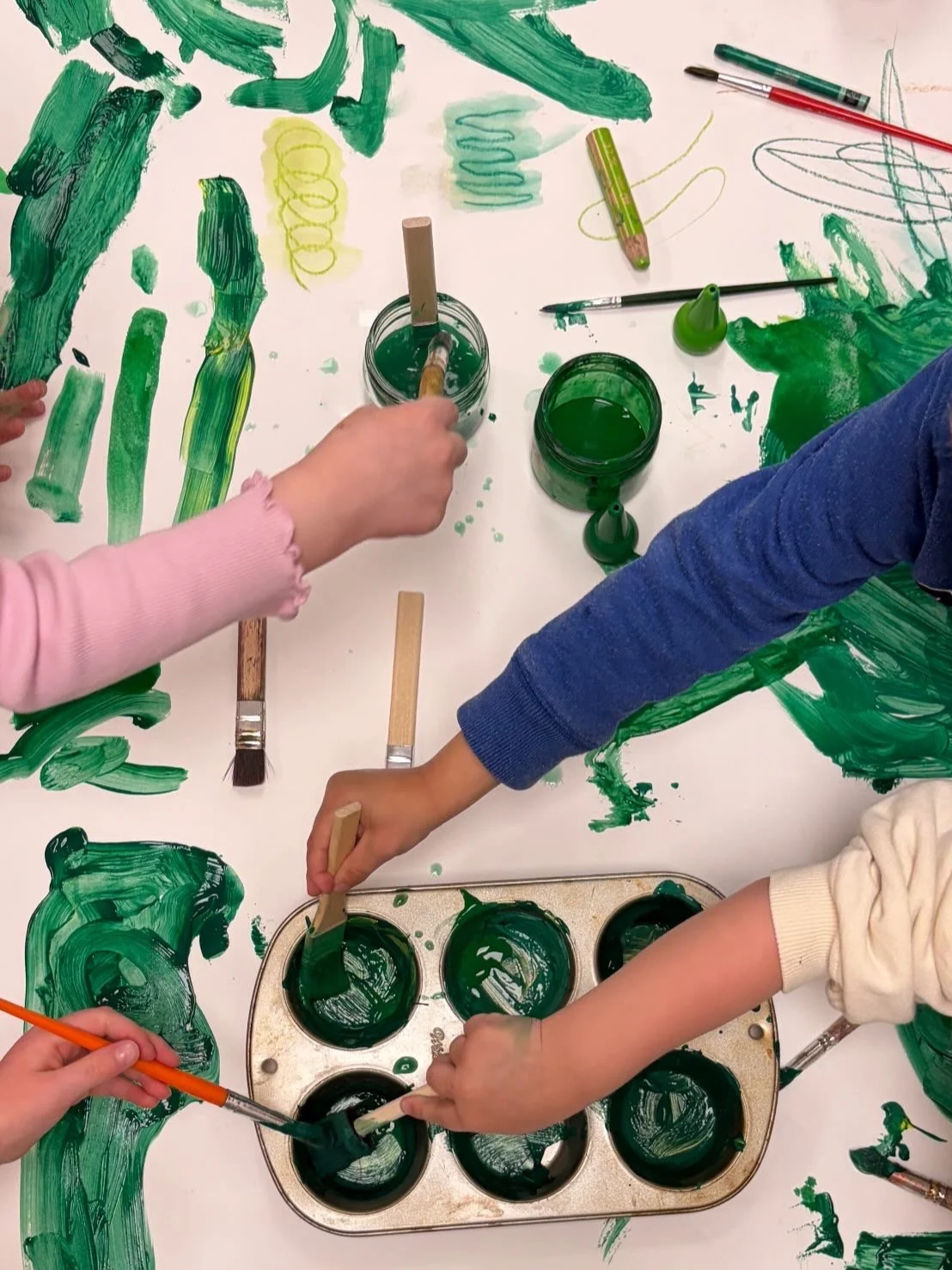
Tuesdays and Wednesdays we offer a recreational program for kiddos ages 3-4.
We call it, Creative, Curious + Kind!
A program created to support kiddos with their transition to kindergarten or larger pre-school programs. It acts as a way for little ones to feel comfortable with another caring grown-up outside of their home and to meet new friends, while having fun being creative, curious + kind!
And the other day I realized how unique this little program is.
Not only is it adorable and incredibly empowering for kids, it has a depth that I am very proud of.
First, join us for a morning in our little ones program to see how sweet it is, and then come behind the scenes with us to hear about the depth.
A Morning in Our Little Ones Program
It’s 9 a.m. on a Wednesday. Families are outside on the sidewalk, standing in a group smiling and chatting away. Kiddos peek in through the windows; their little noses squished against the glass just grinning. They are ready!
The door opens and families are welcomed in by two smiling teachers. “Good morning, friends! Good morning, everyone! Come on in!” It feels like everyone is so happy and excited to be here.
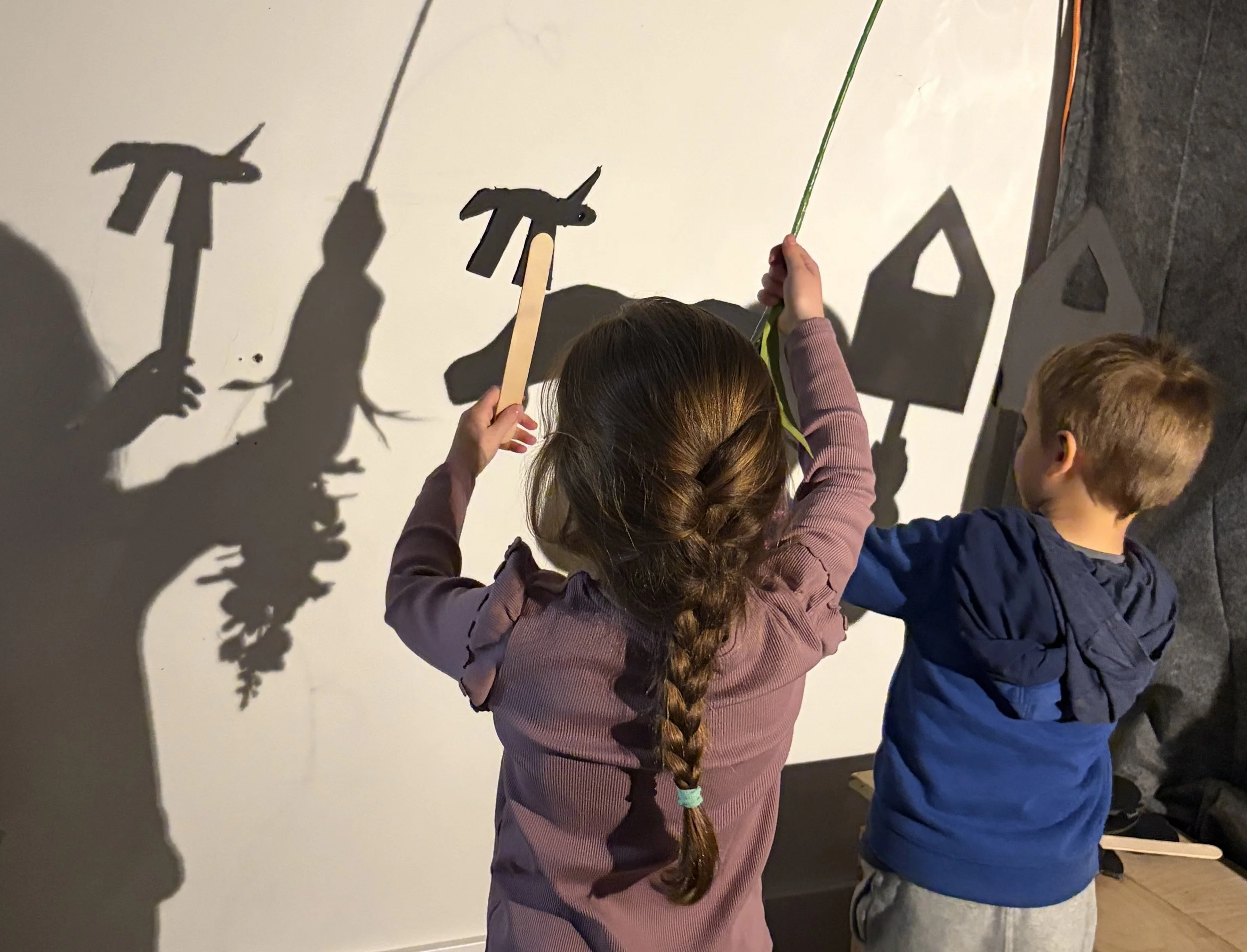
One kiddo excitedly shares that she has new, big girl shoes! Another kiddo is wearing a superhero mask made from colourful blue paper and a rainbow elastic (the kids made them the week before when an apron was worn backwards to be a superhero which sparked the creation of many superhero masks).
They’re ready for a fun morning together.
Being Creative, Curious + Kind!
The sandbox becomes lava. A crew of kiddos builds wooden bridges like stepping stones through the sand. “This bridge is stable!” a kiddo calls out.
A kiddo is in the construction room planning out a rocket ship. She’s sketching her design on a big easel with a carpenter’s pencil; she was inspired by Star Wars (“my dad likes Star Wars.”)
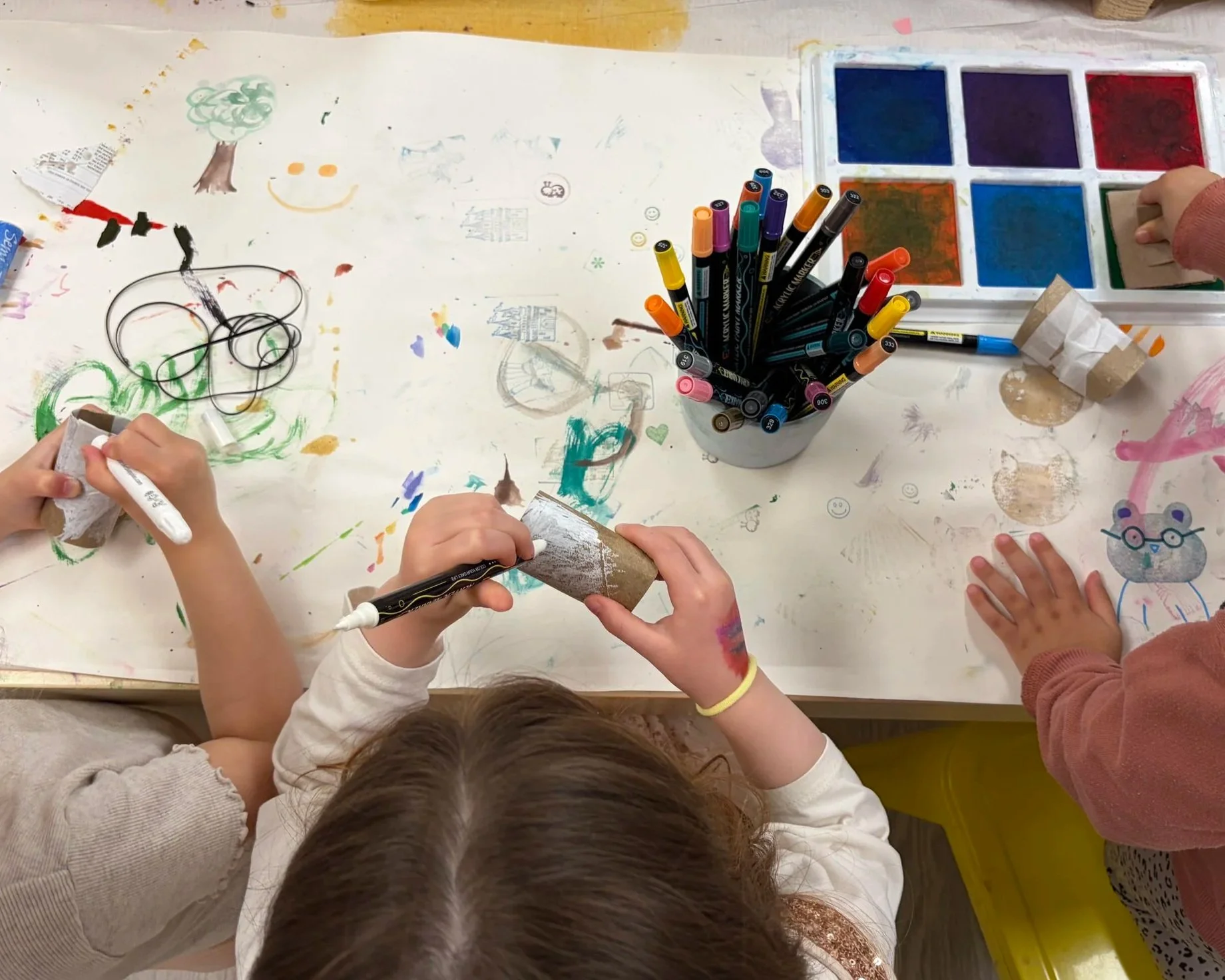
Kiddos are in the art studio. One is drawing a picture of her family. Another is testing out the new glitter markers.
Throughout the morning we hear little voices saying to one another, “Would you like to come and play with me?” “Could I have a turn with that when you’re done?” “Ooooh, what you made is beautiful!”
Later during circle time, the kiddos sit on their “lily pads” (pieces of green felt to learn self-regulation and body awareness when sitting next to others). “What’s a lily pad?” a kiddo asks. We look up images on Lainie’s phone to see what they look like. A kiddo shares, “I’ve seen one of those before! My mom touched one!”
Together we re-read a favourite story of theirs, Serafina Makes Waves. As kiddos listen to the story, they participate by using gestures to mimic rain, splashing in puddles, and WAG-waggle-WAG-”ing” like Lennie the dog. There are giggles and requests to “read it again! Read it again!”
They gather for snack, first washing their hands, then helping set the table. A tablecloth is stretched out and smoothed by little hands that are very proud to help. They count plates and make sure there’s a chair for each friend, a napkin for each, a set of tongs.
They nibble away. Little voices asking, “could you please pass me a strawberry?” (we’ve been practising how to ask for help if we can’t reach). They tidy up their area once done. Putting their plates and napkins in the appropriate bins. There’s more time to tinker and make before the grown-ups come.
Grown-ups are greeted by little people who are full of stories and treasures in their hands - drawings made and “projects” worked on. The kids say good-bye to each other and wave, calling out each other’s names on the sidewalk. Another great morning with our little ones.
Little ones who will begin kindergarten feeling more confident and even more capable.
They’ve learned how to ask for something they’d like or need. They know how to ask for help if they want it. They are comfortable being in an environment without their parent or caregiver. They can navigate conflict and come up with their own solutions. They clean up after themselves. They have learned to respect others by giving them physical space. They can make decisions. They are 3 and 4 years old. And they are amazing little people; they always have been.
The Program
It feels like quintessential childhood to me.
A morning filled with stories, imagination, drawing and painting, dressing up and time with friends. Which feels so refreshing in a world that can feel rushed and in constant pursuit of achievement - even for kids.
But this program, this is joyful.
Joyful for all of us (the kids, their grown-ups, and us as faciliators). We are in our own little world of wonder and play. We have a morning to just be. And it is filled with learning that is developmentally and age appropriate. It is an incredibly powerful program with depth.
What does that mean?
Facilitated by Two Ontario Certified Teachers with Graduate Degrees
Currently, our little ones program is facilitated by two Ontario Certified Teachers (myself and Nicole).
Each of us studied for 5 - 7 years in university programs that focused on child development and learning theory; learning everything from language acquisition, how the brain learns, how to ask questions to elicit critical thinking, how to select texts for children… how to design a learning environment for children. This is what we bring to the little 3 and 4 years olds in the program.
A Belief that Young Learners are Capable
Grown-ups can underestimate what kids already know and are able to do. I do at times too, and I LOVE it when they show me I’m wrong. It’s the best.
Here’s a little example of a kiddo who already knows a lot and is able to figure things out on her own.
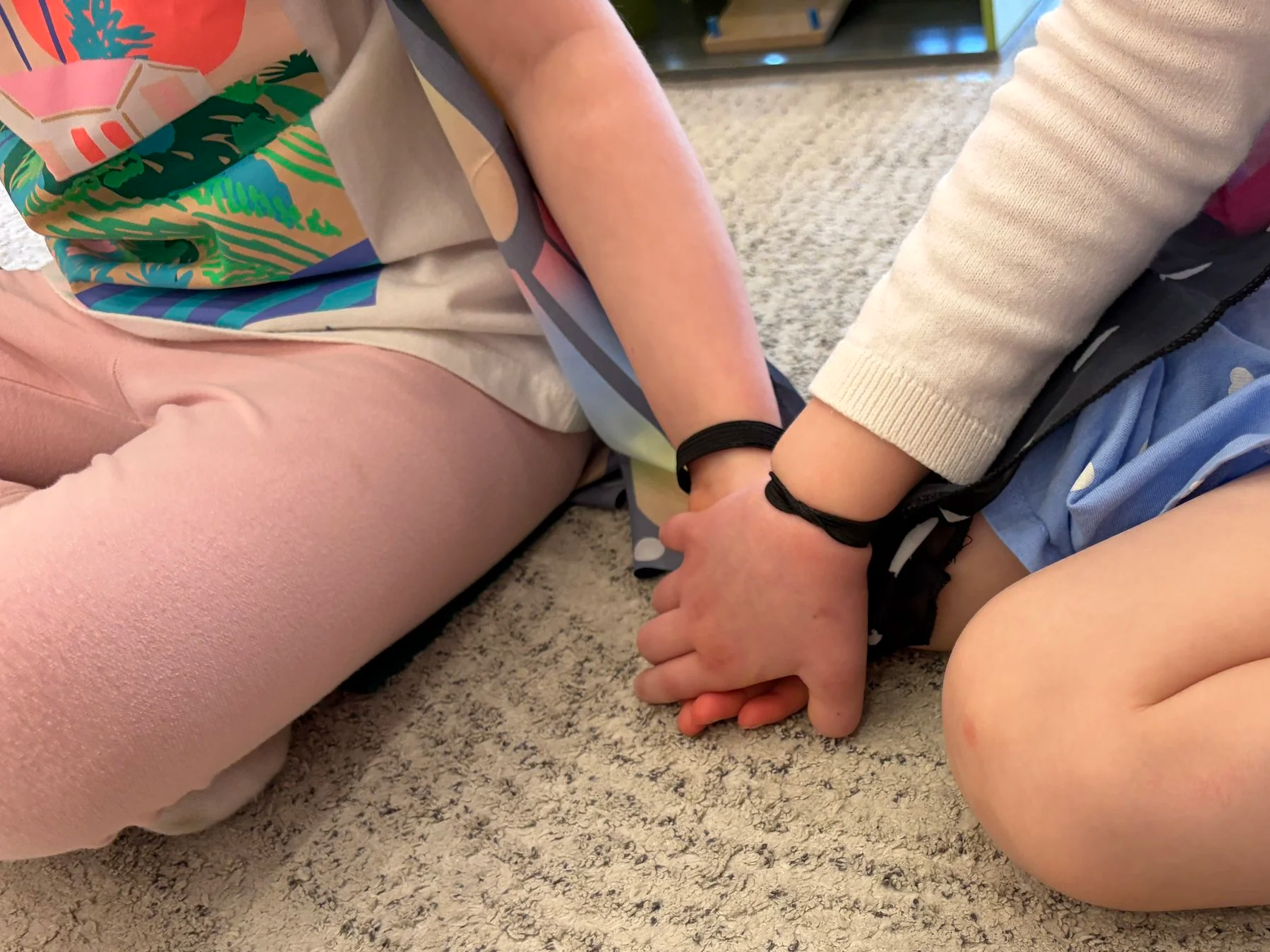
Today in the program, a little one came up to me and said that she needed help to put on a pair of butterfly wings.
I could have quickly and easily put them on her in seconds and we both move on.
Instead I prompted her to lay the wings out on the floor.
“Let’s look at them. What do you notice?”
She noticed straps at the top and on the tips of each wing. “How do I do it?”
I didn’t respond.
Not because I was being rude, but because I wanted to give her space and time to think.
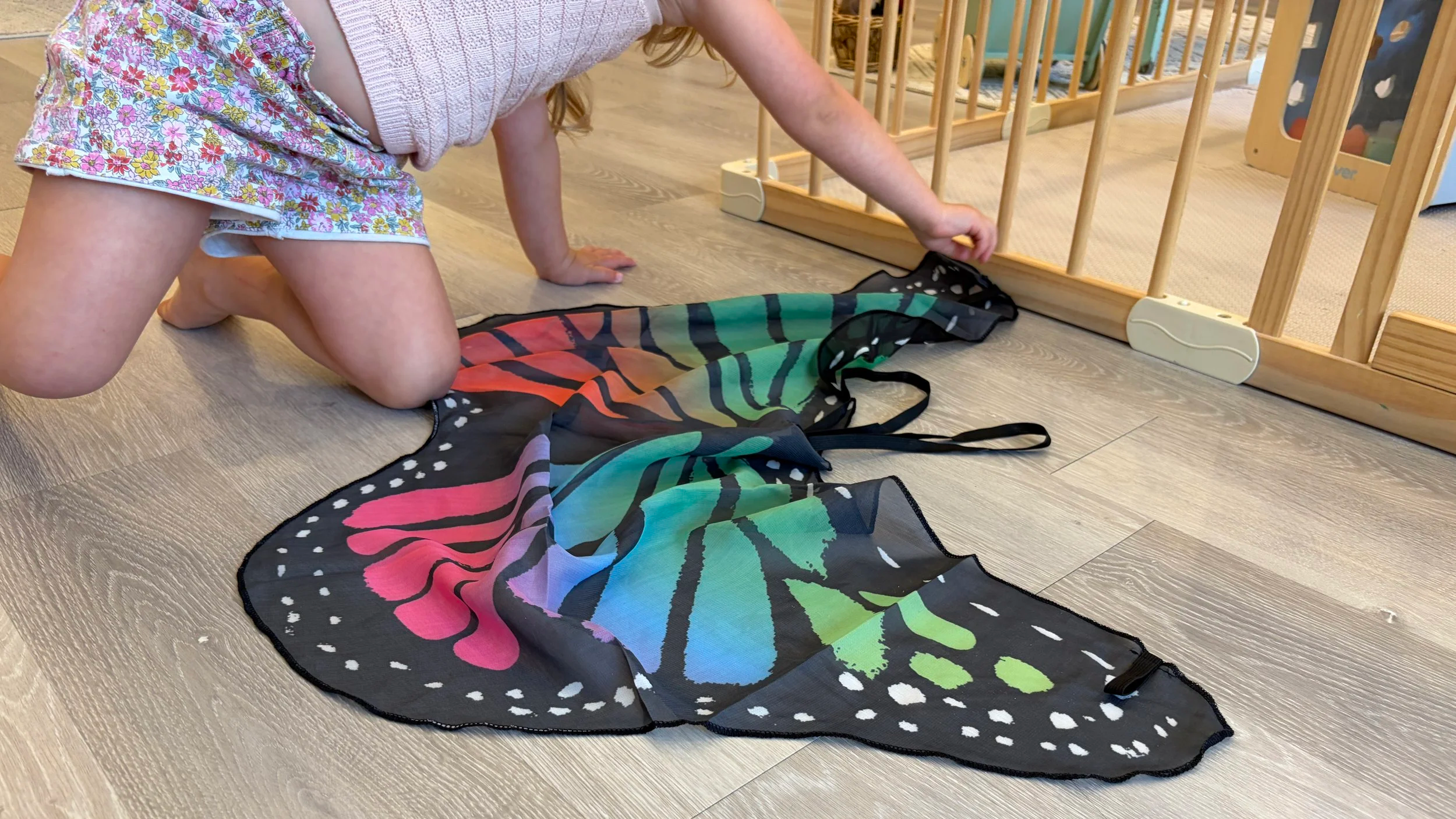
She looked some more and talked aloud as she thought it through. She decided her arms would go through those loops. She went to put her hands through and stopped herself.
“Wait a minute! Butterflies have their wings on their backs!”
She realized that the way she was putting them on would put the wings on her front.
She then proceeded to sit on the floor in front of the wings and try lying back on them to hook one of the loops with her hands. She got one and then asked for help with the other. I helped.
After I thought, if I had jumped in and put them on her, she wouldn’t have spent time thinking about the anatomy of a butterfly - how its wings connect to its body. She wouldn’t have thought through how she was going to move or position her body in order to put them on. Little things maybe, but it would be taking away opportunities for her to think.
A good reminder for me to talk less and to prompt / listen / observe more.
We have much to learn from kids.
Teachers as Researchers
After the kiddos are picked up from the program, Nicole and I sit down together to reflect on the morning.
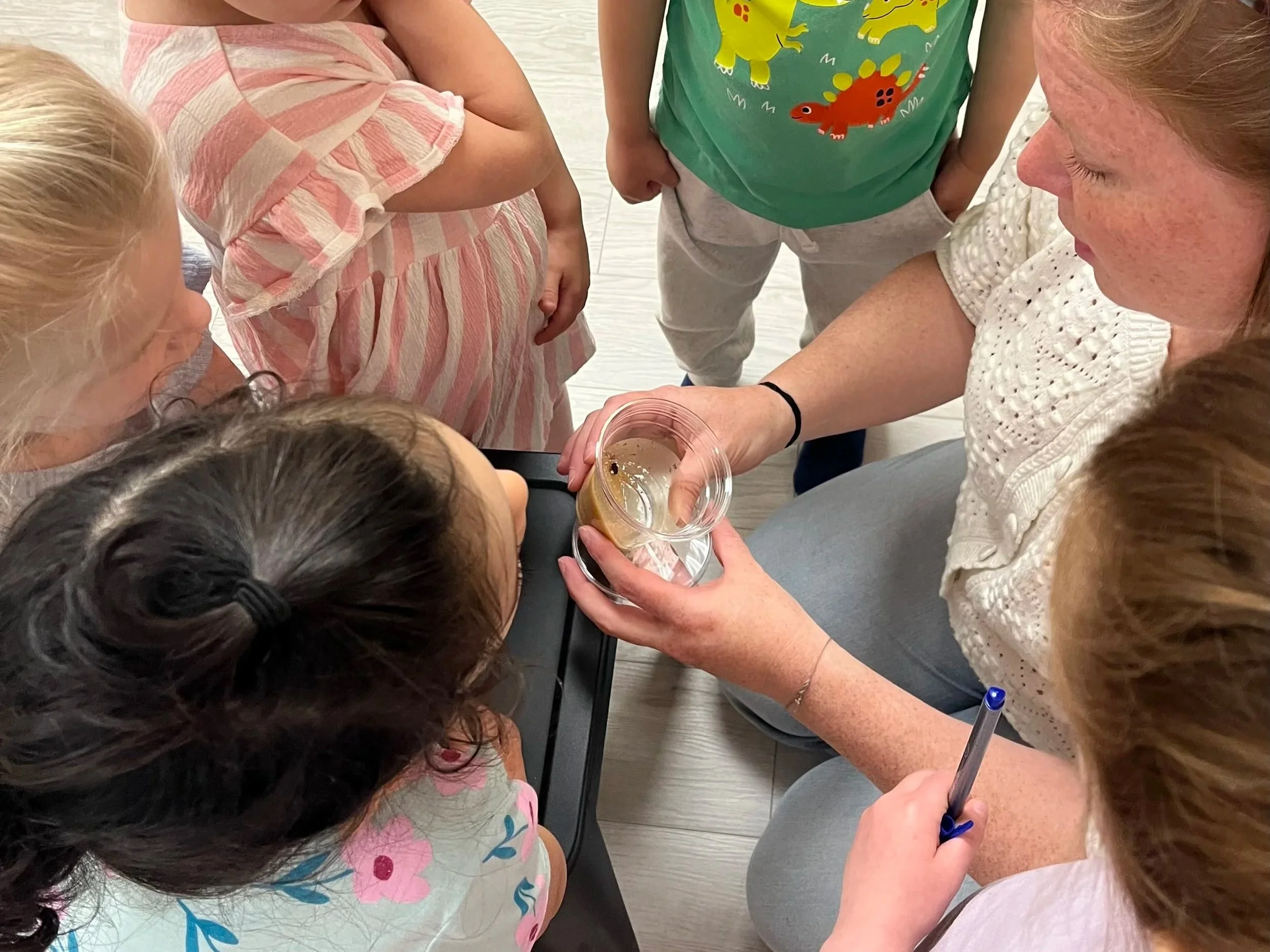
We take turns sharing our observations, anecdotal notes we made, photos of the kiddos creating / playing / thinking… all to learn more about them to help guide our next steps.
We are actively using multiple sources of information to make meaning and connecting it to theory…
Analyzing the Work and Creation of 3 - 4 year olds
I think this is so neat.
How cool (yes, I’m dating myself with this word) that professionals are so interested in the thinking of children that they are analyzing the drawings they are creating of their families, the little paintings they are making, to the way they are holding a marker. We are truly fascinated by them and enjoy seeking to understand them to better support them as they learn more and more. This is fun for us.
For example, with our next inquiry into butterflies, we were wondering if we should introduce observational drawings to the kids - as a way to document the changes they observe in the life cycle of a butterfly. So before jumping in and planning our next session with them (because it’s not about “the activity” or thing we’re doing), we first spent time thinking about the kids and what we’re noticing.
We looked at photos we’ve taken to see if we could look at their grasps.
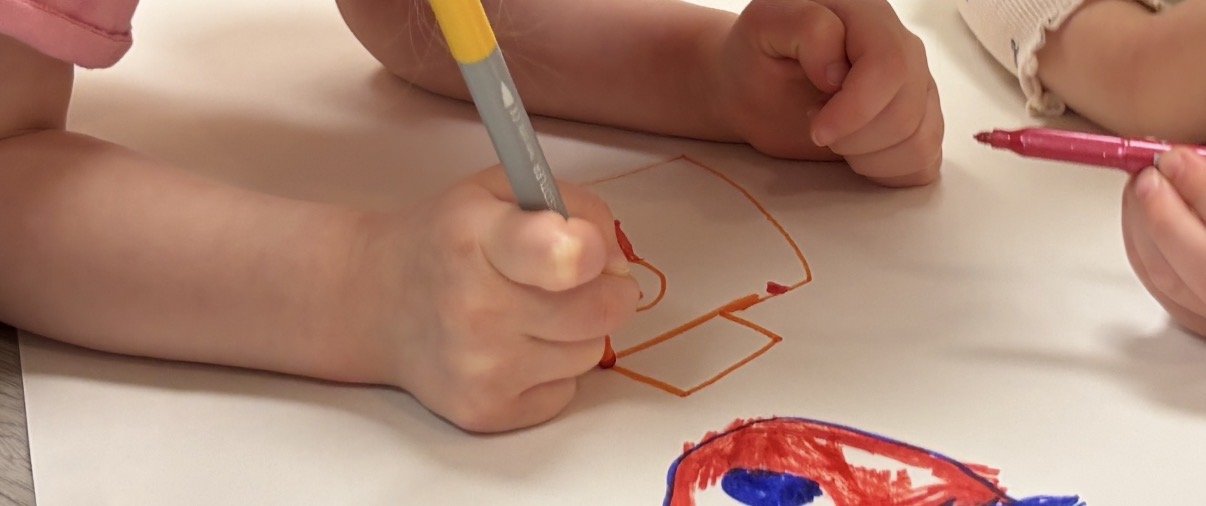
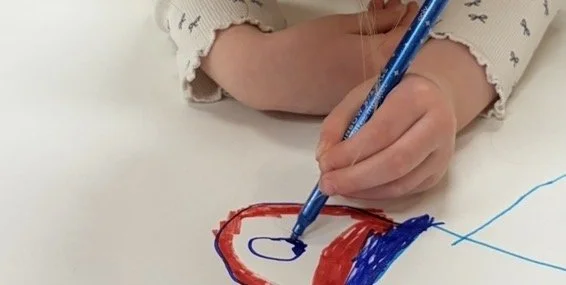
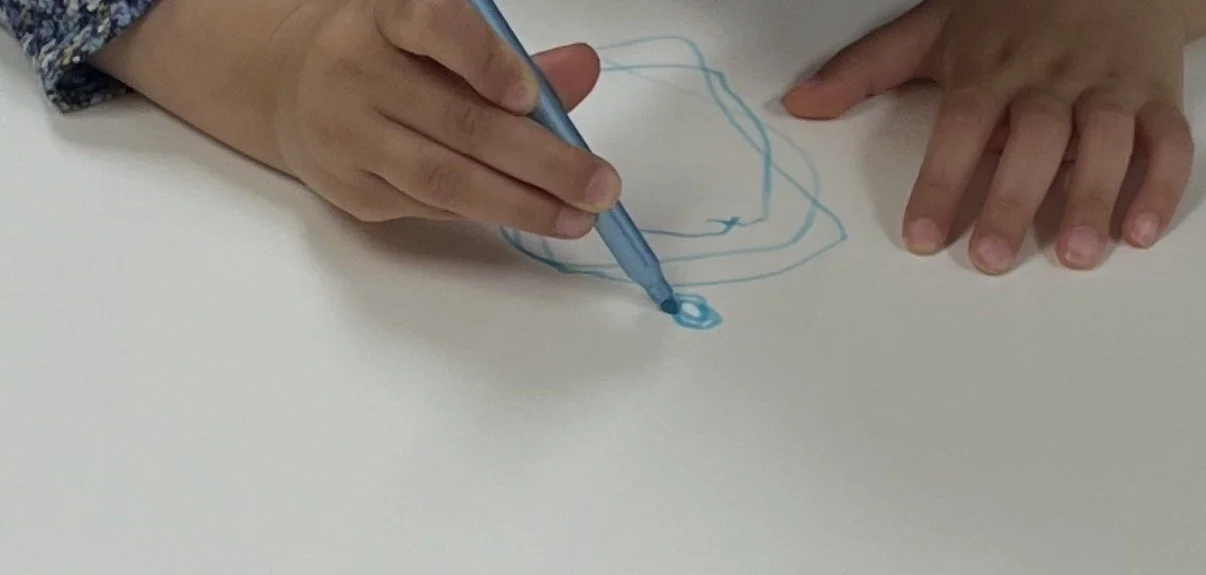
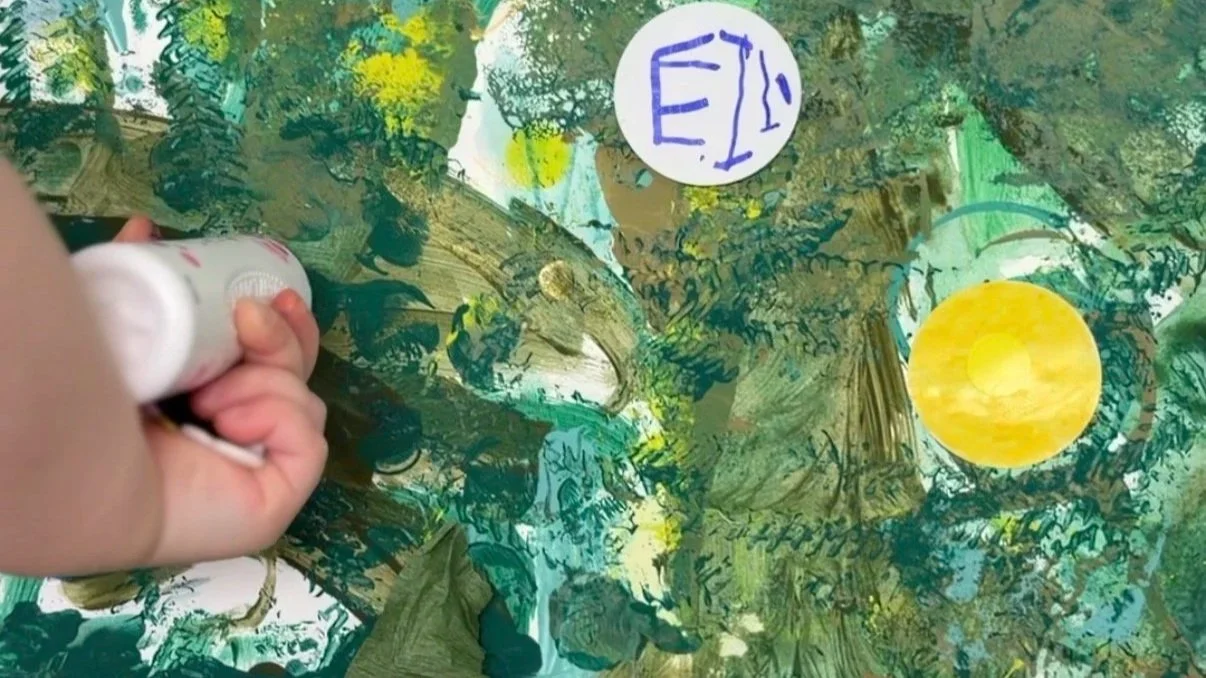
Why look at their grasps?
Because it tells us what kind of movements and marks they’ll be able to create (e.g., small details or big sweeping movements, etc.) Are they at the stage of drawing shapes? small details? Is now the time for observational drawings? Is there something we could do before that, that would be in their zone of proximal development and support them in moving towards observational drawings… Important to think about.
Next we looked at samples of their work (kiddos from a range of ages and experiences)…
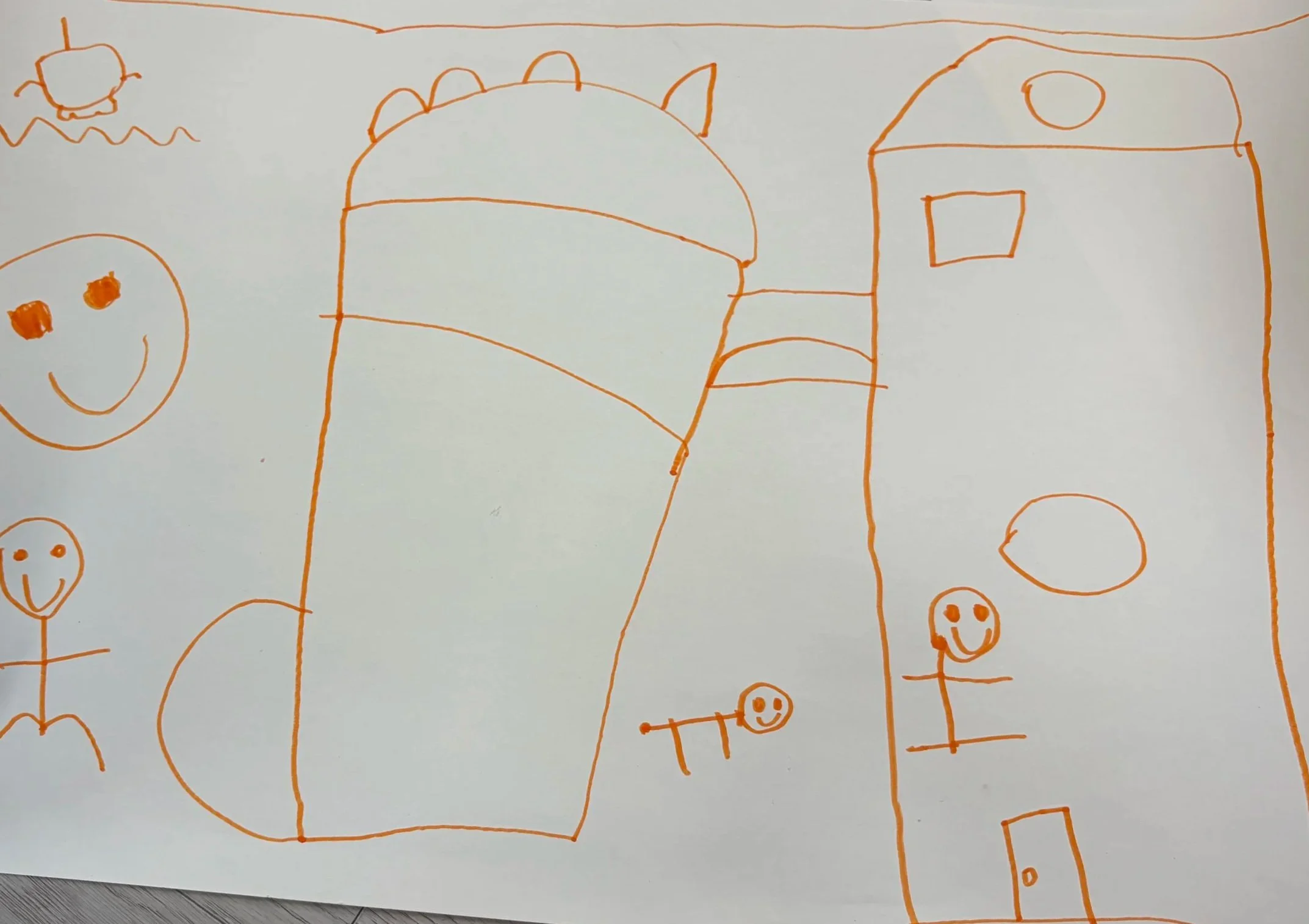
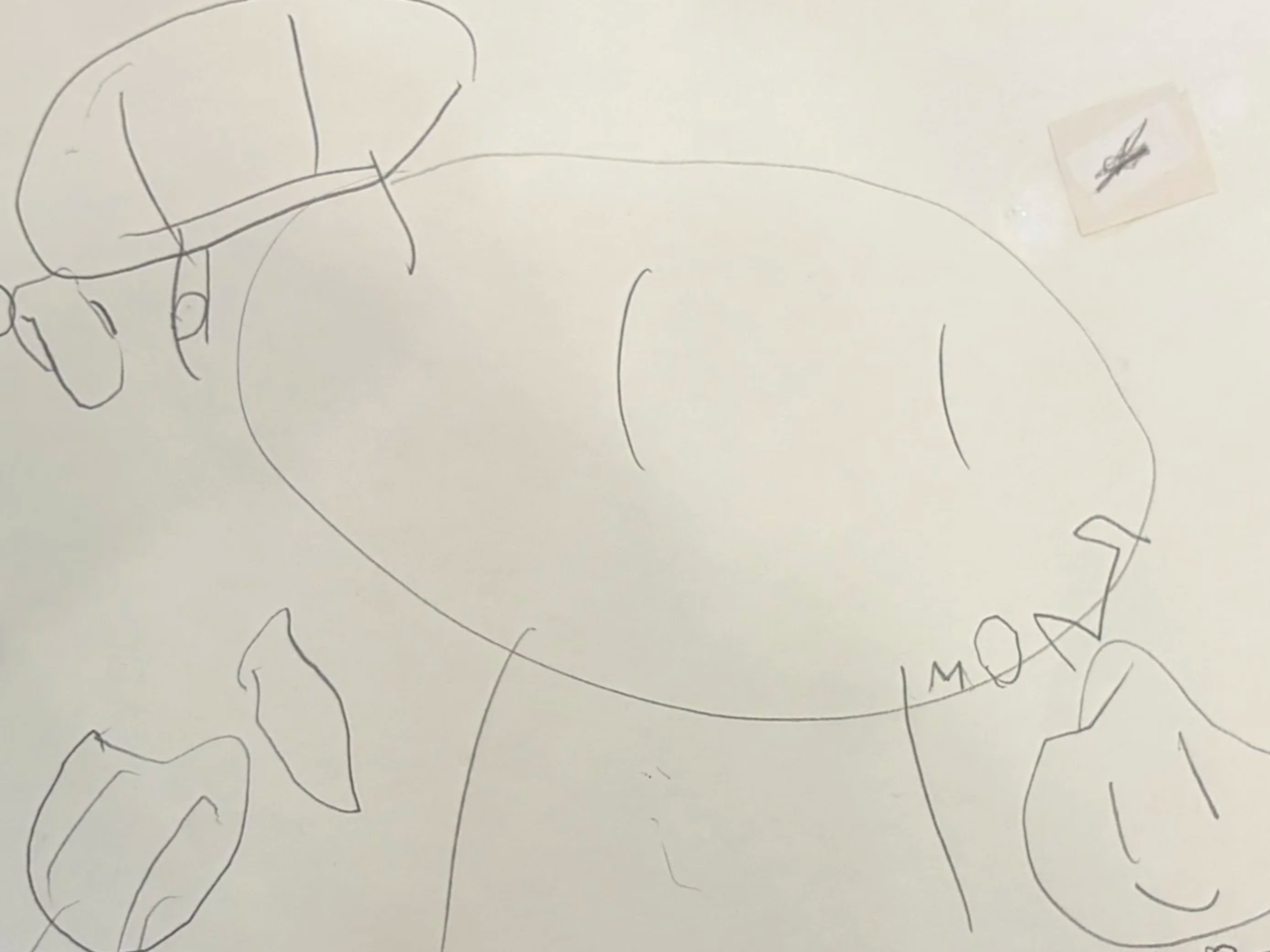
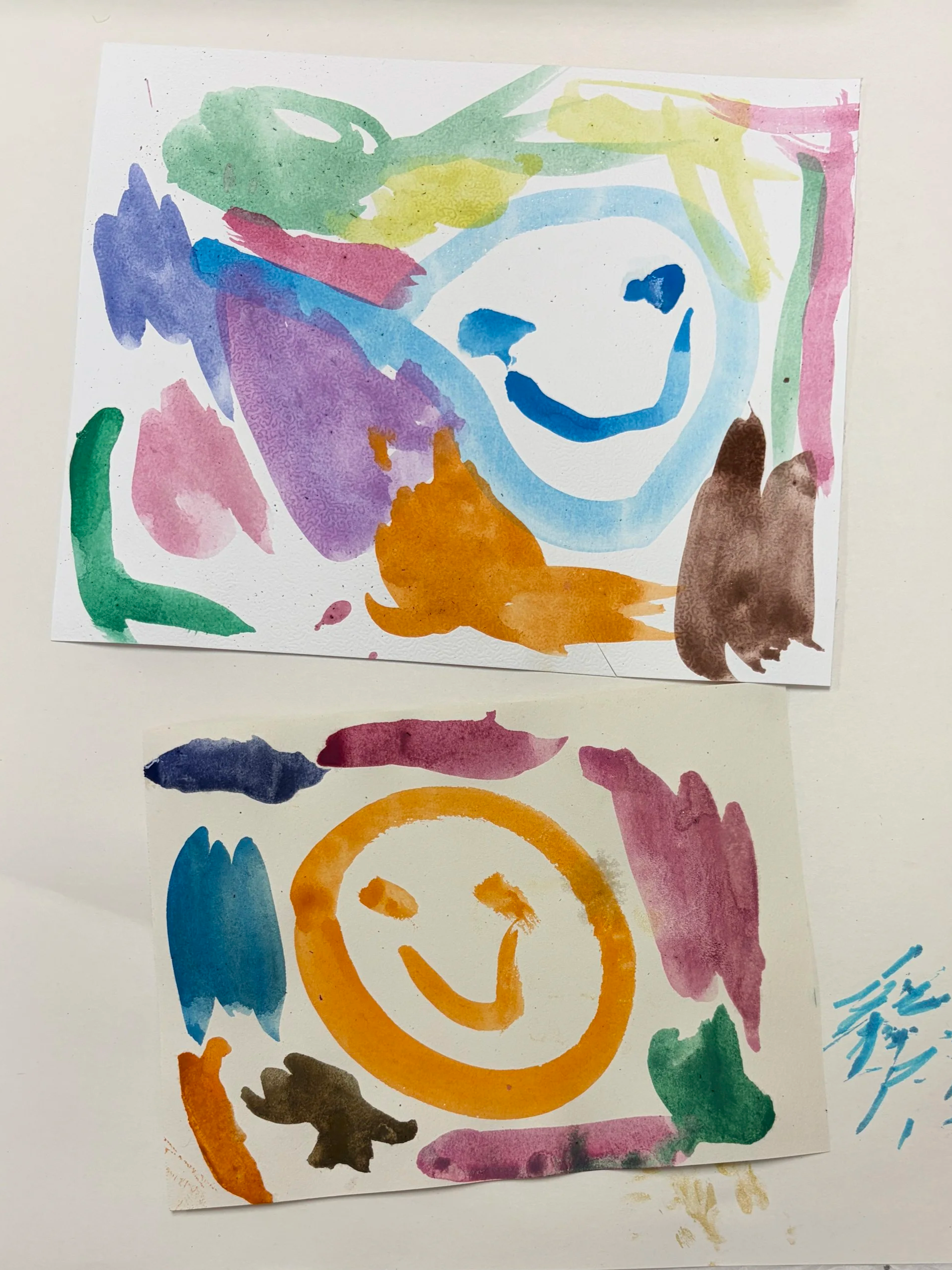
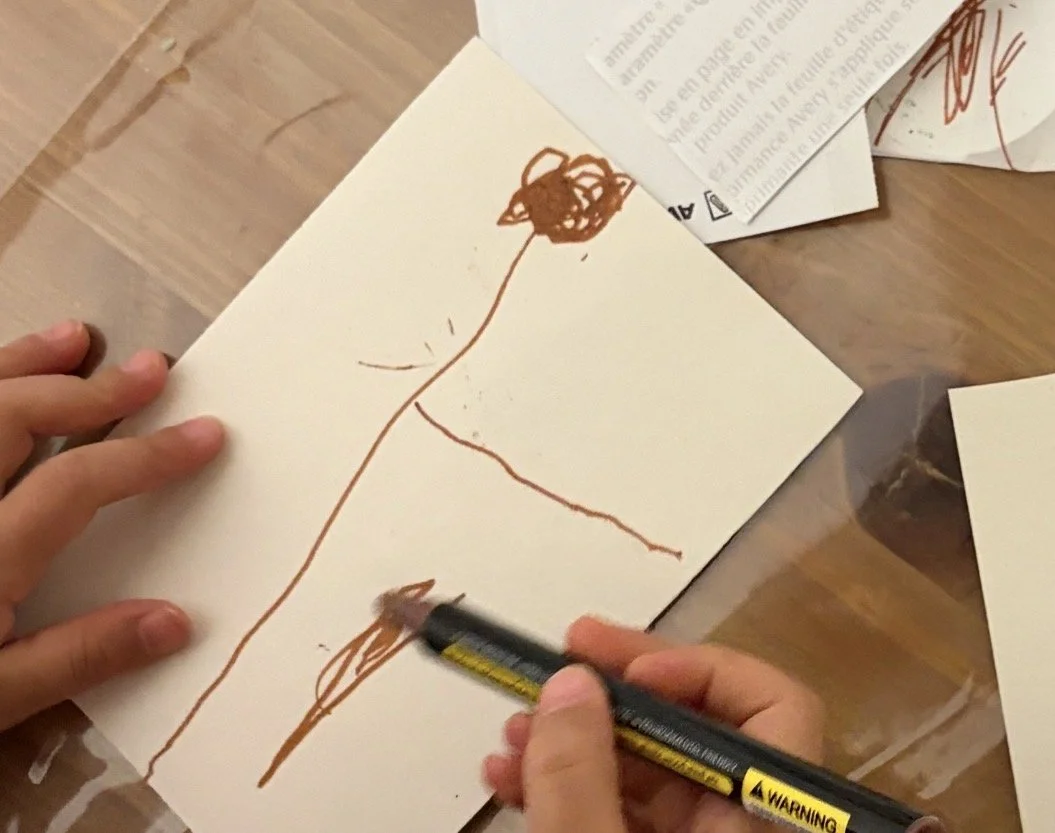
We talked about each kiddo and both shared what we noticed in their drawings. What stage do you think [kiddo] is at? Pre-schematic? Schematic? Scribbling? I think this because… maybe this one because… pointing out details in their drawings.
Two teachers, sitting down analysing the work of 3 and 4 year olds, trying to figure out where they are developmentally and what we can plan for them next that will be fun, meaningful and appropriate for where they are right now (and knowing where they’re going).
This is unreal.
This is what happens in professional development sessions for educators. I know because it used to be my job to facilitate them. To look at samples of student work and have professional conversations about student thinking and potential next steps tied to conceptual understanding, curriculum, learning goals, and more. And this is happening for 6 - 7 kiddos in a little morning drop off recreation program for 3 - 4 year olds.
I wish this for all kids. To have someone so invested in them. Imagine that for your own kid(s). That there is someone who wants to know them. Really know them. Who knows how they might feel when they meet someone new and what helps them join in. Someone wanting to learn more about them - that they will go through photographs just to see how they hold their pencil or marker, so they can plan something for them that will be fun and not frustrate them. That’s the part I love. That these kids are so considered and respected.
This is what’s happening in our recreational program for little ones - the depth behind it all.
Why write about this?
To celebrate kids and all that they can do, and to honour the professionals who work alongside children. It’s the respect we have for the profession and the level of skill and knowledge educators draw upon in order to make kids feel heard, understood, seen and valued. Because they deserve that.